

Porsche won the Rolex 24 At Daytona 2024 at Daytona International Speedway. The #7 Porsche 963 of Porsche Penske Motorsport covered 791 laps over 23h 58m, a race distance of 4,532 km. The winning crew: Dane Cameron, Felipe Nasr, Matt Campbell and Josef Newgarden. The margin to second place was just 2.112 s — a sprint finish after a full endurance race. The quickest manufacturer over one lap was Cadillac — but the win went to Porsche. Pace and result do not always match.
How the Lead Was Won
Across the race we counted 12 lead changes among 5 different cars in the GTP class.
Manufacturer Pace
We rank pace by the average of each manufacturer’s fastest lap. That measures real speed over the distance instead of one lucky lap. The order at the top: Cadillac (215.4 km/h), Porsche (215.2 km/h), Acura (214.7 km/h).
Between the fastest and the slowest manufacturer in the GTP class lie 0.8 km/h. That is a tight field — the balance of performance is doing its job.
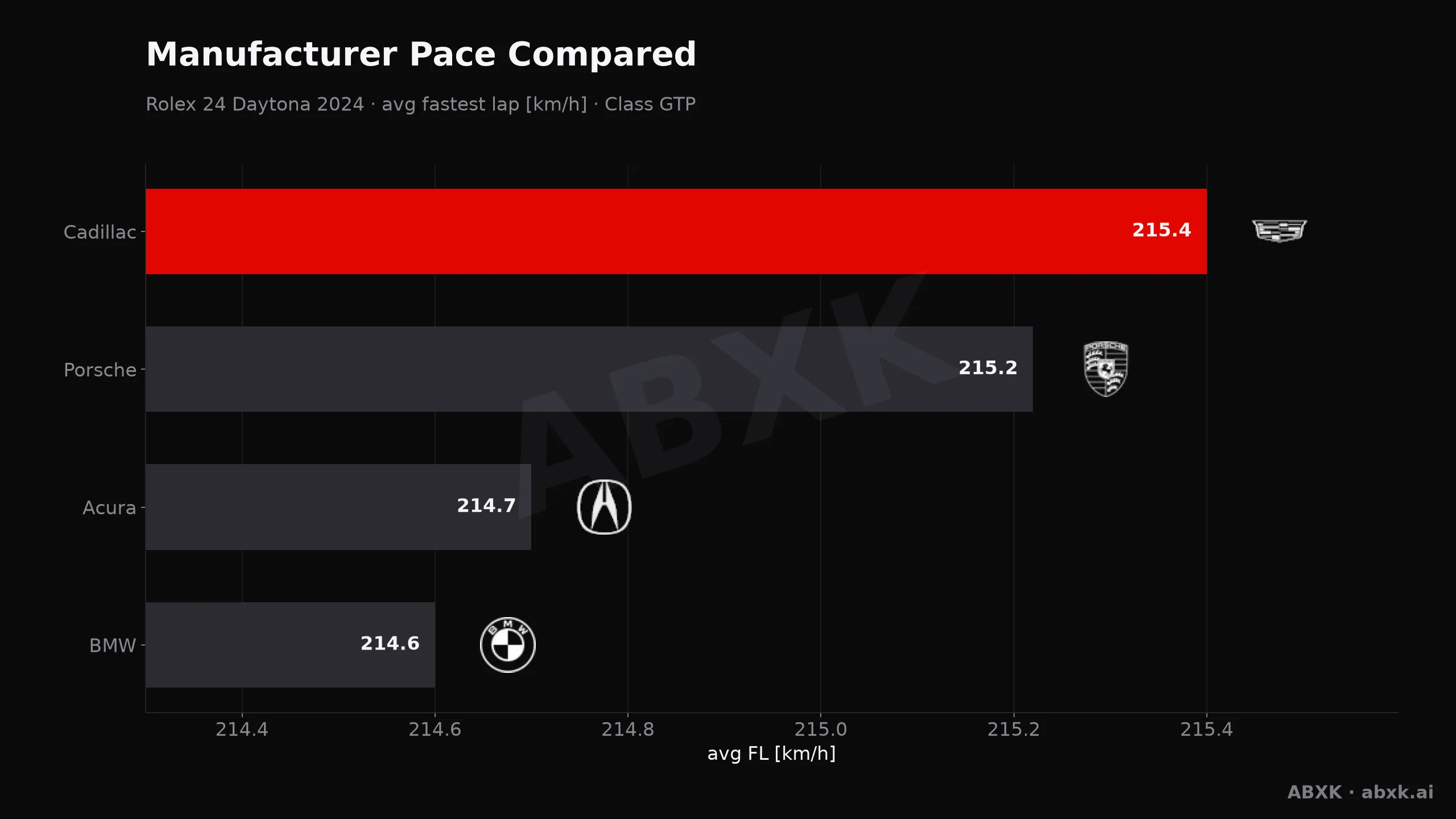
Figure 1 sets the pace order side by side.
Who Went the Distance
The official result lists every starter as classified, so it does not mark retirements. We therefore measure how far each car actually got: a car counts as having gone the distance when it completed at least 95 % of its class winner’s laps.
By that measure 39 of 59 cars went the distance (66%). GTP held up best at 80%, GTD Pro worst at 62%. On average, a car covered 83% of the winning distance.
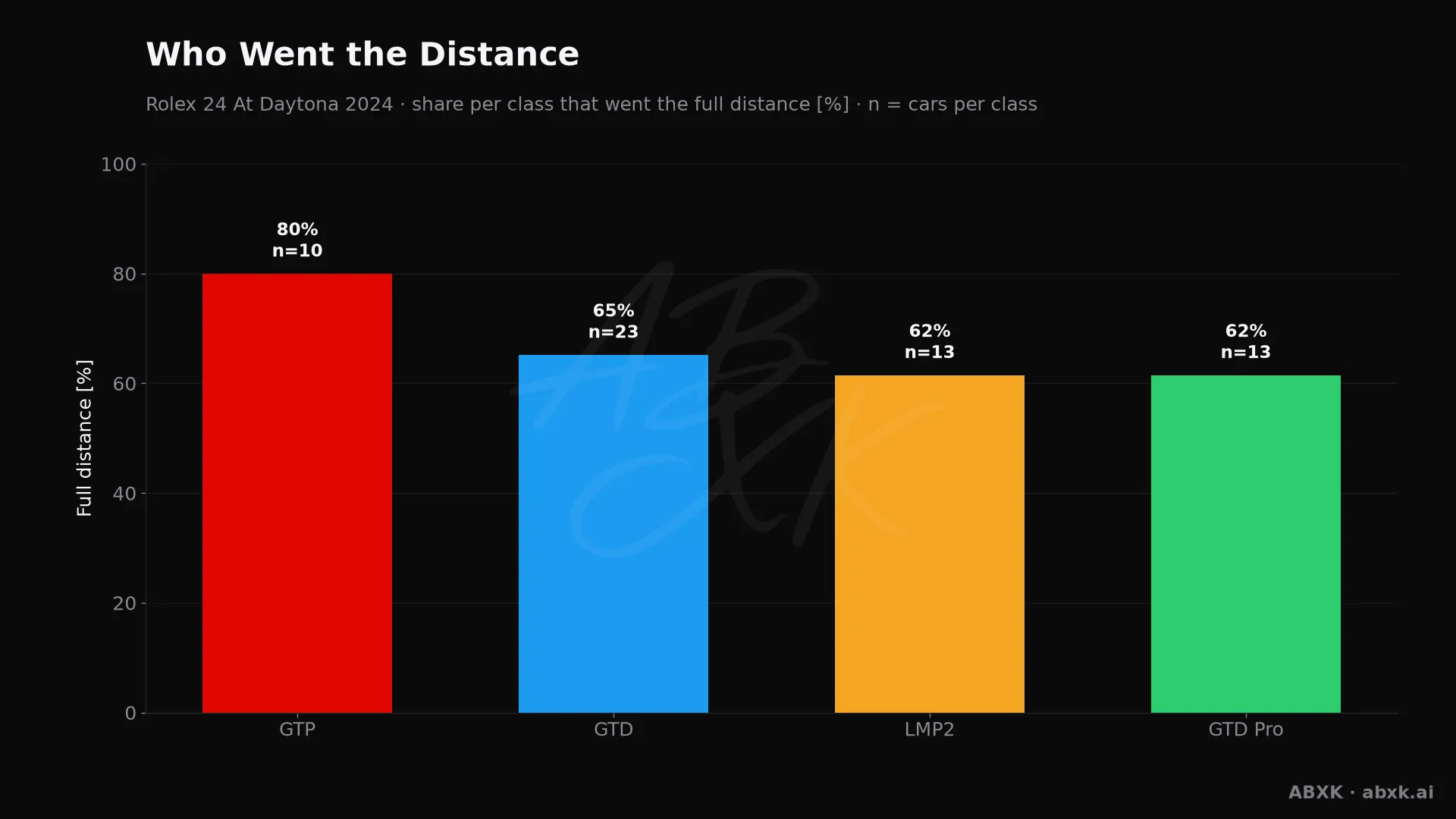
Figure 2 compares the classes directly.
Efficiency Over the Distance
Our efficiency score multiplies average lap speed by laps completed and compares that to the class average. It rewards cars that were fast and stayed out of trouble. A value of 1.000 is exactly class average.
The top score goes to #31 Cadillac with 1.085. The winner, #7, is not on top here. Track position and strategy turned into a result that raw efficiency alone does not explain.
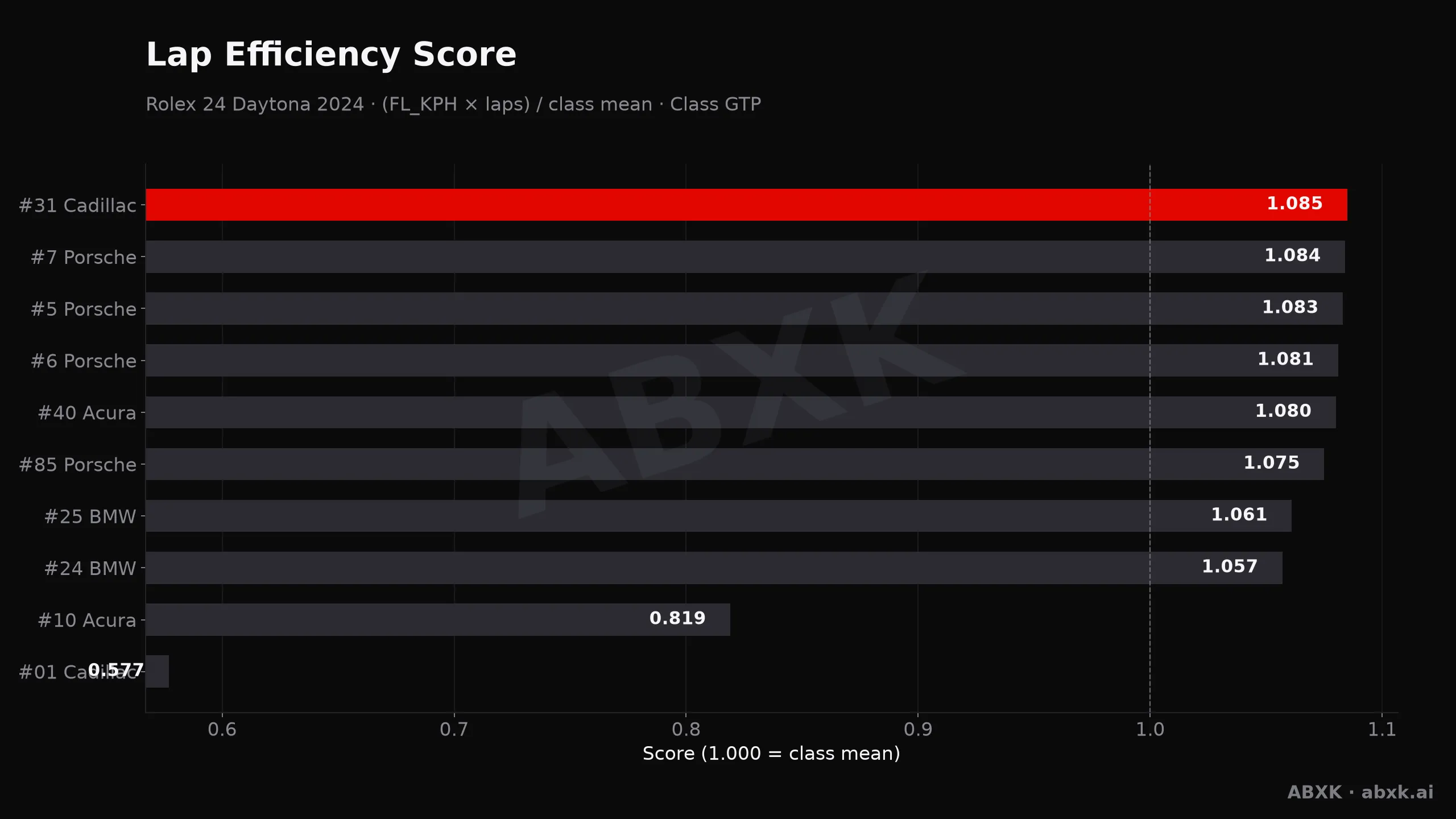
Figure 3 ranks the cars by that score.
Night Versus Day
Top-class cars averaged 214.4 km/h in daylight and 214.3 km/h at night. The difference is 0.10 km/h — faster in daylight.
In other words: no measurable night effect. Darkness costs concentration and makes traffic harder to read, but it does not slow modern prototypes down.
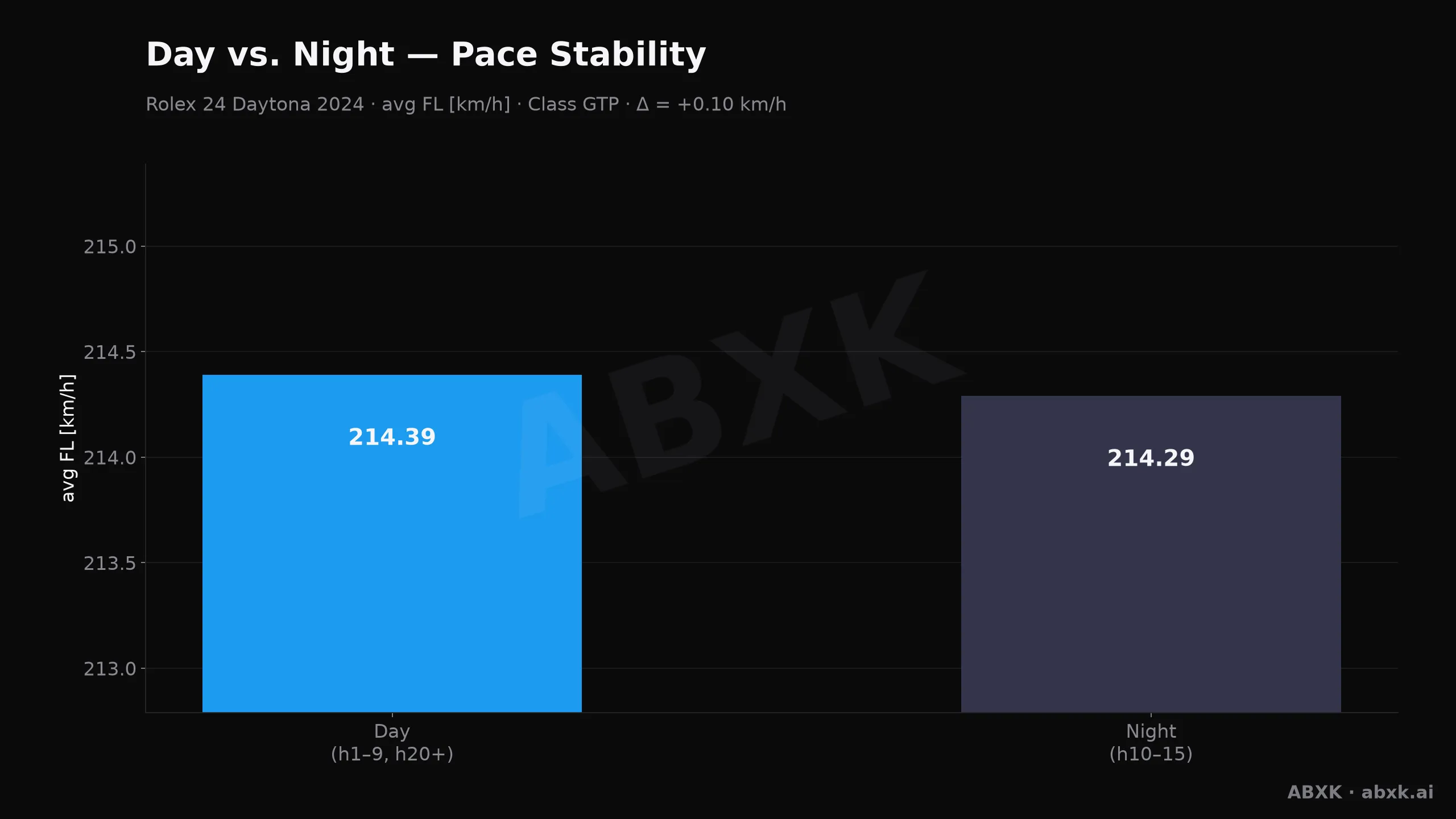
Figure 4 puts both phases next to each other.
The Closing Phase
In the final hour, 95% of the field held position within ±1 place (n = 59). The race was settled well before the flag. The biggest single move came from #12, 3 places back.
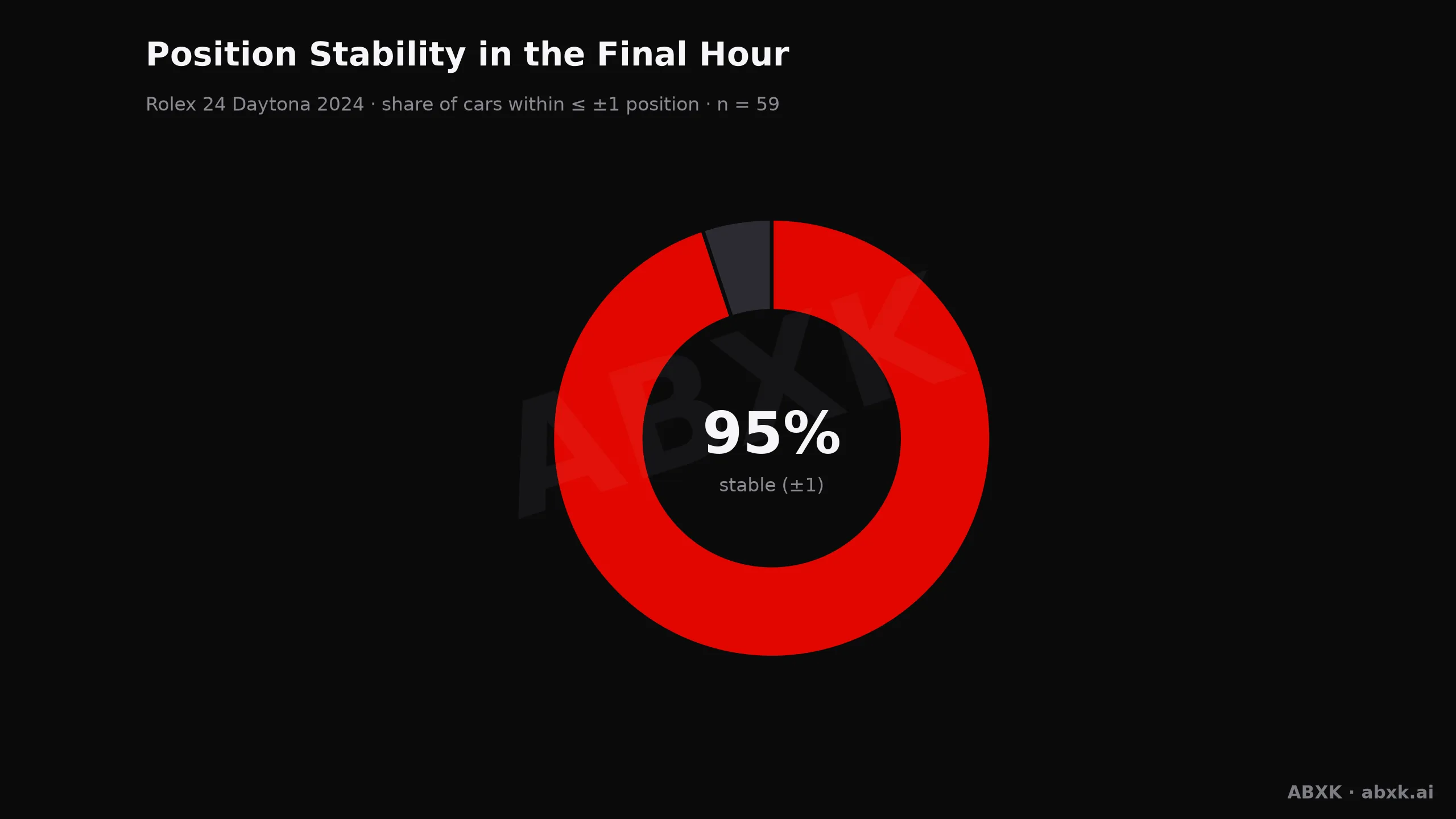
Figure 5 shows how settled the finish really was.
Fastest Lap and Class Gaps
The fastest single lap of the race belongs to #31 Cadillac (Whelen Engineering Cadillac Racing): 1:35.554 at 215.9 km/h. Crew: Pipo Derani, Jack Aitken and Tom Blomqvist.
Between GTP and LMP2 sits a pace gap of 4.5 s per lap. That number decides how much traffic the leaders have to work through.
Class winners — GTP: #7 Porsche (Porsche Penske Motorsport), LMP2: #18 Oreca (Era Motorsport), GTD Pro: #62 Ferrari (Risi Competizione), GTD: #57 Mercedes-Benz (Winward Racing).
Putting the Race in Context
The winner averaged 189.0 km/h across 4,532 km. On a 5.729 km lap, that is the pace the whole strategy had to sustain.
We calculate the same metrics for every race in the archive: pace order, reliability by class, lead changes, winning margin, closing stability and efficiency. That makes this race directly comparable with every other round of the 2024 season — and with the seasons before it.
All figures are derived from the full classification of every race hour and are recalculated with each build.


