
Building an AI Trading Platform: Our Progress So Far
What Is This Project About?
We are building the ABXK.AI Trading Platform. It uses artificial intelligence to help make better trading decisions. The special thing about it is that it learns from its own mistakes and gets better over time.
In this article, we will show you what we have done so far and what challenges we still face.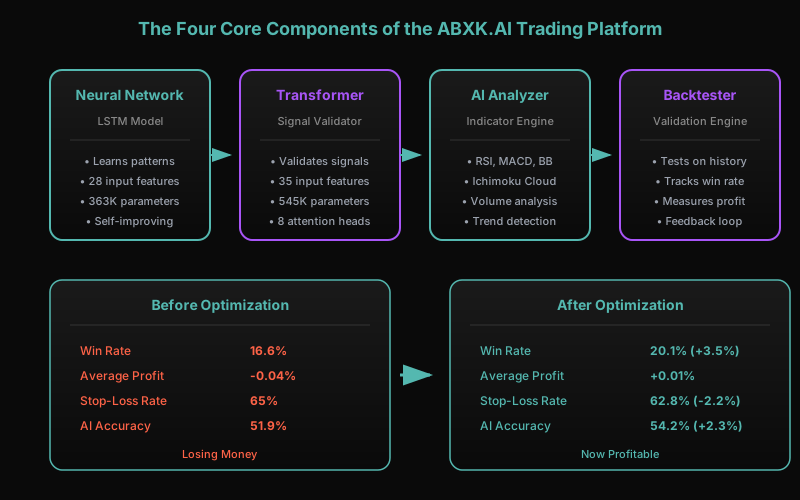
How Does It Work?
Our system has four main parts:
- Neural Network - This learns patterns from past trades
- Transformer Model - This checks if trading signals are good
- AI Analyzer - This looks at different market indicators
- Backtester - This tests trades on old data to see if they would work
The clever part is that when a trade wins or loses, the system remembers this and adjusts itself. This means it should get smarter over time.
Our Results: Before and After
Where We Started
When we first measured our system, the results were not good:
| What We Measured | Result |
|---|---|
| Win Rate | 16.6% |
| Average Profit | -0.04% |
| Trades Hitting Stop-Loss | 65% |
| AI Accuracy | 51.9% |
With only 16.6% of trades winning, we were losing money.
Where We Are Now
After making several improvements, our results are better:
| Measurement | Before | After | Change |
|---|---|---|---|
| Win Rate | 16.6% | 20.1% | +3.5% |
| Average Profit | -0.04% | +0.01% | Now Positive |
| Stop-Loss Rate | 65% | 62.8% | -2.2% |
| AI Accuracy | 51.9% | 54.2% | +2.3% |
The system now makes a small profit instead of losing money. This is an important step forward.
What Changes Did We Make?
1. We Made Stop-Losses Wider
The biggest problem was that 65% of our trades were stopped out too early. The price would move against us a little, trigger the stop-loss, and then move in the direction we wanted.
We changed the stop-loss distance from 1.2 to 1.5 times the average price movement. This gave trades more room to work.
# Before: Stop-loss was too close
risk_distance = atr * 1.2

# After: Stop-loss has more room
risk_distance = atr * 1.5
This one change reduced failed trades from 65% to 62.8%.
2. We Chose Better Stocks
We found that some stocks work much better than others for our system:
Stocks That Work Well:
- JPM (bank): 31.3% win rate
- BTC-USD (bitcoin): 28.1% win rate
- HD (home improvement): 26.3% win rate
- AMZN (amazon): 23.1% win rate
Stocks We Removed (Too Many Losses):
- NFLX: 0% win rate
- PG: 0% win rate
- GS: 4.2% win rate
- ETH-USD: 6.7% win rate
- GOOGL: 8.3% win rate
By only trading stocks that work well with our system, we improved our results.
3. We Found the Best Time Period
We tested different time periods for our charts. The results were very different:
| Time Period | Win Rate |
|---|---|
| 4 hours | 21.2% [Best] |
| 1 hour | 19.7% |
| 1 day | 16.7% |
The 4-hour chart gives the best results.
4. We Improved How the AI Learns
We made several changes to help the AI learn better:
- More patience — We let the AI train longer before stopping
- Balanced data — We gave it equal amounts of winning and losing examples
- Smaller steps — The AI makes smaller adjustments, which is more accurate
- Save best version — We keep the best version of the AI, not the last one
Problems We Still Have
Problem 1: Win Rate Is Still Low
A 20.1% win rate is better than 16.6%, but professional systems usually aim for 30% or higher. We’re looking at:
- Moving stop-losses up when trades go well
- Using multiple time periods together
- Adding news and social media analysis
Problem 2: Not Enough Training Data
We only have 293 completed trades to learn from. AI systems usually need thousands of examples to learn well.
Our solution: We keep running more tests to create more training data.
Problem 3: Markets Change
A system that works in a rising market might not work in a falling market. We’re working on ways to detect the type of market we’re in.
Problem 4: Learning the Wrong Things
With limited data, the AI might learn patterns that don’t really exist. We prevent this by:
- Stopping training before it memorizes the data
- Testing on data the AI has never seen
- Retraining regularly with new data
The Technology We Use
Here is what we built the system with:
- Programming Language: Python 3.12
- Web Server: Flask 3.0
- AI Library: PyTorch 2.0
- Market Data: yfinance
- Database: SQLite with SQLAlchemy
- AI Models: LSTM and Transformer networks
What We Will Do Next
Our plans for the next few weeks:
- Moving Stop-Losses — Automatically move stop-losses up to lock in profits
- More Data — Get to 1,000+ test trades before training again
- Focus on 4-Hour Charts — Use our best-performing time period
- Combine Models — Use both AI models together for better predictions
What We Learned
Here are the most important lessons from this project:
- Understand the problem first. Before writing code, we needed to understand why trades were failing.
- Give trades more room. Making stop-losses wider worked better than making entry rules stricter.
- Some stocks just don’t work. It’s better to remove bad performers than to try to fix them.
- AI needs time to learn. Stopping training too early meant the AI couldn’t learn complex patterns.
- Measure everything. Without good data, you can’t know if changes help or hurt.
Final Thoughts
Building a profitable AI trading system takes a long time. We’ve made good progress — the system now makes money instead of losing it. But we still have work to do before it’s ready for real trading.
We’ll continue to improve it and share our progress.
Learn more about the platform: AI Trading Platform
AI Trading Platform Blog
 AI Trading Platform Blog
Read our development journey and latest updates:
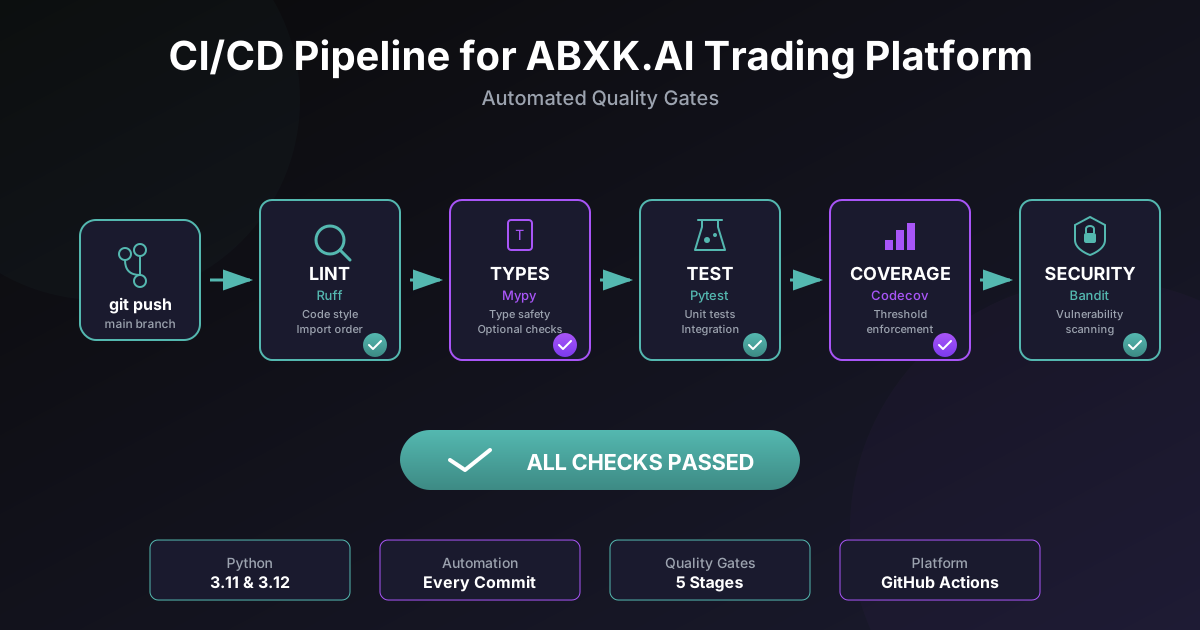
AI Trading Platform: Adding CI/CD to Our Development Workflow
We implemented a CI/CD pipeline for the AI Trading Platform. This post documents the approach, the types of bugs it catches, and why automated testing matters …
AI Adoption in Trading: Why Acting Now Matters
AI adoption in trading is accelerating. Learn why firms that act now gain an advantage, and how our AI trading platform validates this approach through real …
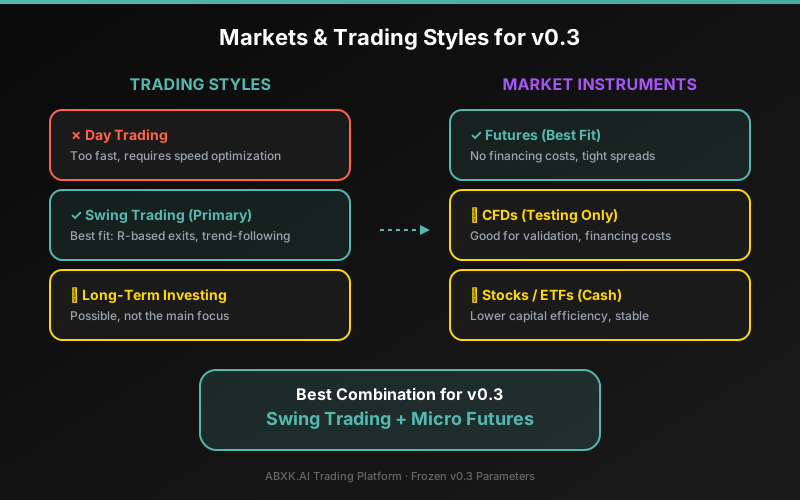
AI Trading Platform: Choosing the Right Markets and Trading Style
We tested our frozen v0.3 exit strategy across different markets and trading styles. Here is what we learned about CFDs, futures, stocks, and why swing trading …

AI Trading Platform: Exit Strategy Breakthrough & Paper Trading System
Our AI trading platform improved expectancy from near-zero to statistically meaningful levels through a two-stage exit strategy. We also built a causal paper …
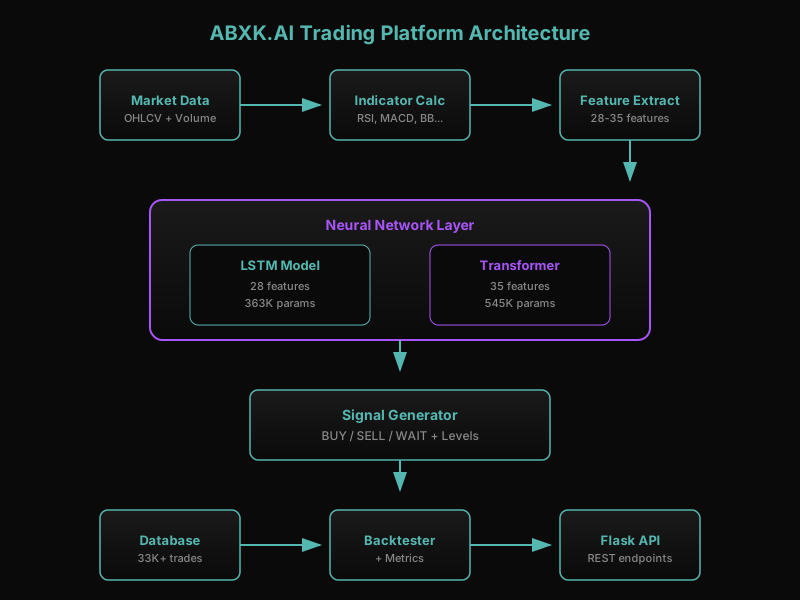
AI Trading Platform: Security Audit & Major System Updates
A comprehensive audit of our AI trading platform reveals a critical security fix, frontend accessibility improvements, and live stats from 33,000+ analyzed …
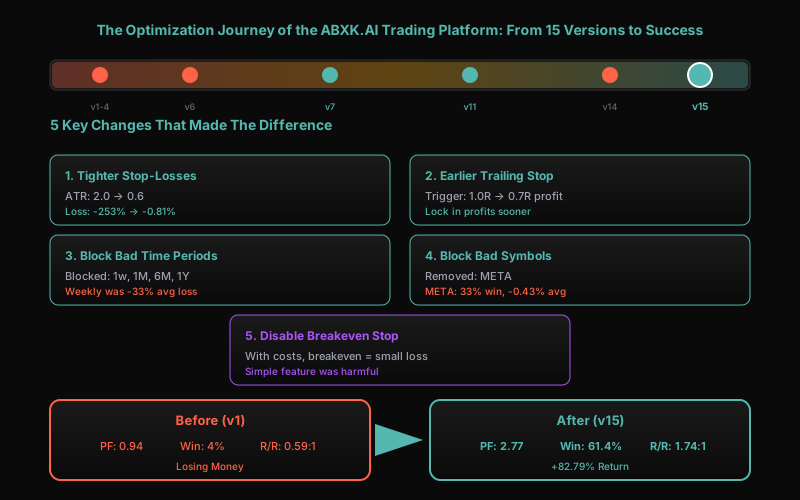
AI Trading Platform: Observing Model Behavior During Strategy Optimization
A research note documenting how iterative changes affected model behavior, risk distribution, and evaluation metrics.
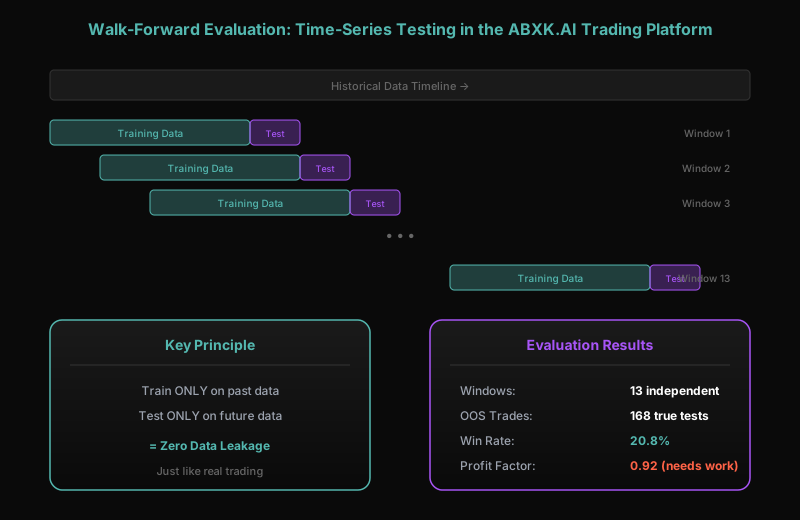
AI Trading Platform Update: Building a Bulletproof Evaluation Framework
Two days of intensive work on preventing overfitting and data leakage. Here's what we built and what we learned.
The AI Trading Platform is an internal research project operated exclusively by ABXK.AI. It is not publicly accessible and cannot be used by visitors.
Any results, insights, or examples shared on this website or on social media are provided for informational and educational purposes only and do not constitute financial advice.