
AI Trading Platform: The v1.1 Pivot — Admitting Failure, Finding the Fix
In trading system development, the hardest part is not building a strategy. The hardest part is admitting when your strategy does not work.
This post shares a story of failure, discovery, and correction. Our v0.4 momentum-decay exit strategy produced negative expectancy after 1,486 paper trades. Instead of hiding this result, we analyzed it, found the structural flaw, and designed a new hypothesis with pre-registered rules.
This is not about being smarter. This is about being honest.
The v0.4 Failure
What v0.4 Was Designed to Do
The v0.4 strategy used momentum decay as an exit signal. The idea was simple:
- Enter on a volatility compression breakout
- Ride the move while momentum stays strong
- Exit when momentum weakens (before it reverses)
This sounds reasonable. Many traders use momentum indicators to time exits.
What Actually Happened
After 1,486 paper trades over several months, the numbers told a different story:
| Metric | v0.4 Result | Problem |
|---|---|---|
| Expectancy | -0.0017R | Losing money per trade |
| Win Rate | 24.2% | Below break-even for any realistic reward/risk |
| Timeout Exits | 96% | Almost no trades hit target |
| Target Exits | 3.2% | Strategy never captured the move |
The 96% timeout rate was the clearest signal. Our exit hypothesis was wrong. Momentum decay triggered too early. We were cutting winners and holding losers.
This is not a profitable strategy. This is a strategy that slowly loses money.
The Hard Question
At this point, we had a choice:
- Tune the parameters — adjust thresholds, change timeouts, hope for better results
- Question the hypothesis — ask if momentum decay was ever the right exit signal
We chose option 2. Parameter tuning without structural analysis is just curve fitting.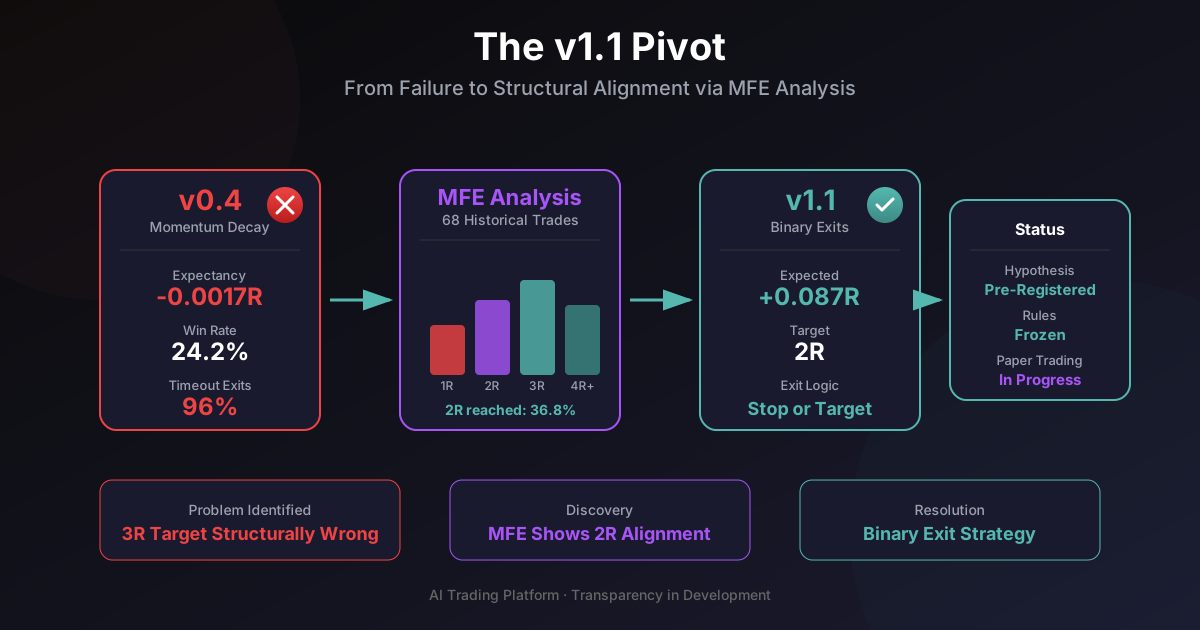
Finding the Problem with MFE Analysis
What is MFE?
Maximum Favorable Excursion (MFE) measures how far a trade moved in your favor before it ended. If you enter a long trade, MFE is the highest price reached during the trade, measured in R-multiples.
MFE tells you what was possible, not what you captured.
The Discovery
We ran MFE analysis on 68 historical compression breakout trades. Here is what we found:
| MFE Statistic | Value |
|---|---|
| Median MFE | 1.03R |
| 75th Percentile | 2.74R |
| Percentage reaching 2R | 36.8% |
| Percentage reaching 3R | 23.5% |
This was the key insight. Our old 3R target was structurally misaligned:
- 3R target requires 25% win rate to break even (1 win pays for 3 losses)
- Actual 3R reach rate: 23.5%
- Gap: -1.5 percentage points below break-even
No amount of parameter tuning can fix this. If your target reach rate is below break-even, you will lose money. The math is simple and final.
The 2R Sweet Spot
But look at the 2R numbers:
- 2R target requires 33% win rate to break even
- Actual 2R reach rate: 36.8%
- Margin: +3.8 percentage points above break-even
This is structural edge. Not optimization. Not curve fitting. Basic math alignment.
Designing v1.1 with Pre-Registered Rules
The Core Hypothesis
v1.1 tests a specific mechanical hypothesis:
During volatility compression, liquidity thins and stops cluster. A breakout triggers a cascade effect that produces asymmetric price movement.
This is not “momentum continuation.” It is a liquidity vacuum event.
Locked Parameters
Before any paper trading, we locked every parameter:
| Parameter | Value | Reason |
|---|---|---|
| Compression | ATR ≤ 10th percentile (252-bar window) | Captures genuine low-volatility states |
| Breakout buffer | 0.2 × ATR | Filters noise, confirms real breakout |
| Target | 2R | Calibrated to MFE distribution |
| Stop | 1R | Standard risk unit |
| Trailing stop | None | Clean binary test |
| Timeout | None | No artificial exits |
Why Binary Exits?
This is important. v1.1 uses only two exit types:
- Stop hit: -1R (exactly)
- Target hit: +2R (exactly)
No trailing stops. No timeouts. No partial exits.
Why? Because we are testing a specific claim: Compression breakouts produce 2R moves often enough to be profitable.
Adding trailing stops or timeouts contaminates this test. If we use trailing stops and lose money, we do not know if the problem is:
- Compression does not produce expansion
- Our trailing stop parameters are wrong
Binary exits give a clean answer. Either the mechanism works or it does not.
Backtest Validation
Before paper trading, we validated v1.1 against historical data:
| Metric | v1.1 Backtest | Status |
|---|---|---|
| Trades | 69 | Sufficient sample |
| Expectancy | +0.087R | Positive (above 0.03R kill threshold) |
| Win Rate | 36.2% | Above 33% break-even |
| Target Hit Rate | 36.2% | Matches expected range |
This is not proof that v1.1 works. This is evidence that v1.1 is structurally viable.
The real test is paper trading with real-time data.
Kill Criteria (Pre-Registered)
We committed to specific failure conditions before starting:
Primary Kills (300 trades)
| Criterion | Threshold | Action |
|---|---|---|
| Expectancy | < 0.03R | Archive v1.1 |
| Win Rate | < 30% | Archive v1.1 |
Early Termination (150 trades)
| Criterion | Threshold | Action |
|---|---|---|
| Expectancy | < 0 | Stop immediately |
Mechanism Falsification
Even if v1.1 is profitable, we test if the mechanism is real:
| Test | Threshold | Meaning |
|---|---|---|
| Median MFE | < 1.0R | Expansion not occurring |
| Target Hit Rate | < 25% | Expansion too weak |
If median MFE is below 1.0R, this means trades are not even trying to expand. The mechanism would be falsified even if we happen to be profitable by luck.
Gap Handling (Technical Detail)
One important technical decision: how to handle price gaps.
Stop Fill Rule
If price gaps through your stop level on bar open:
Fill at WORSE price (bar open, not stop level)
This is realistic. In a real gap-down, you get filled at the open, not at your stop. This means some losses exceed -1R.
Target Fill Rule
If price gaps through your target level on bar open:
Fill at TARGET level (cap at +2R)
This is conservative. We do not take credit for lucky gaps beyond our target.
This asymmetry is intentional:
- Pessimistic on stops — assume worst-case fills
- Conservative on targets — no windfall gains
What We Learned
Mistakes We Made
- Wrong exit hypothesis — Momentum decay exits too early
- Target misalignment — 3R target was structurally below break-even
- No pre-registration — v0.4 was built without locked parameters
- No mechanism tests — We only looked at profitability, not structural validity
What We Changed
- Binary exits — Clean test of the expansion hypothesis
- Target calibration — 2R aligns with actual MFE distribution
- Pre-registered spec — All parameters locked before trading
- Mechanism tests — MFE and target hit rate test the underlying thesis
The Meta-Lesson
Parameter optimization is not research. If you tune parameters until backtests look good, you have not learned anything. You have just found numbers that fit historical noise.
Real research requires:
- A specific hypothesis about market structure
- Locked parameters before testing
- Kill criteria that falsify the hypothesis
- Honest reporting when things fail
v0.4 failed. We said so publicly. v1.1 might also fail. If it does, we will report that too.
Current Status
v1.1 paper trading starts now. Progress checkpoints:
| Checkpoint | Trades | Test |
|---|---|---|
| Early kill | 150 | Expectancy ≥ 0 |
| Full evaluation | 300 | Expectancy ≥ 0.03R, Win rate ≥ 30% |
| Mechanism check | 300 | Median MFE ≥ 1.0R, Target rate ≥ 25% |
All results will be shared transparently.
FAQ
Why did v0.4 fail?
Two reasons: (1) Momentum decay exits cut winners too early, and (2) the 3R target was above the structural reach rate. The strategy was mathematically losing.
Is v1.1 guaranteed to work?
No. v1.1 is a hypothesis under test. Historical backtests show positive expectancy, but paper trading will confirm or reject this.
Why not use trailing stops?
Trailing stops add complexity and ambiguity. If v1.1 fails with binary exits, we know the compression hypothesis is wrong. If it fails with trailing stops, we do not know if the problem is the hypothesis or the trailing parameters.
How is v1.1 different from v0.4?
| Feature | v0.4 | v1.1 |
|---|---|---|
| Exit type | Momentum decay + timeout | Binary (stop/target only) |
| Target | 3R | 2R |
| Trailing | Yes | No |
| Pre-registered | No | Yes |
What happens if v1.1 fails?
We archive it and publish the failure. No re-tuning. No “v1.2 with adjusted parameters.” The hypothesis would be falsified.
Failure is information. Our v0.4 momentum-decay strategy lost money. Instead of hiding this, we analyzed it, found the structural flaw, and designed a new test with pre-registered rules.
v1.1 may succeed or fail. Either outcome teaches us something real about market structure. That is the point of research.
The dashboard is live. The rules are locked. The experiment begins now.
AI Trading Platform Blog
 AI Trading Platform Blog
Read our development journey and latest updates:
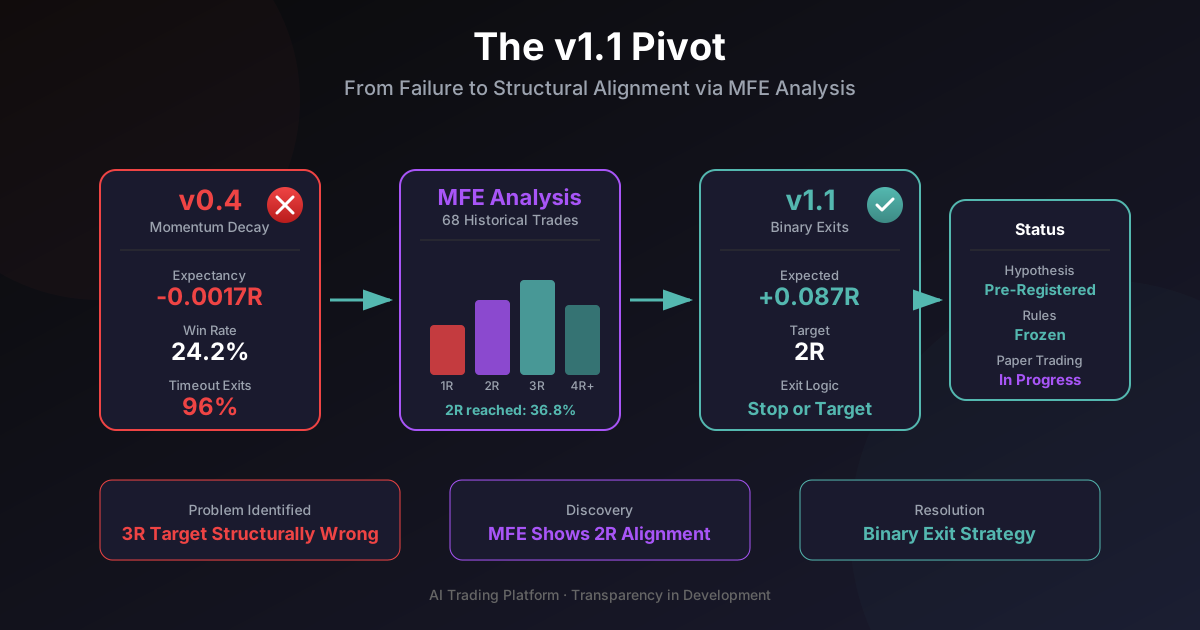
AI Trading Platform: The v1.1 Pivot — Admitting Failure, Finding the Fix
How our v0.4 momentum-decay exit strategy failed with negative expectancy, and how MFE analysis revealed the path to a structurally sound v1.1 compression …
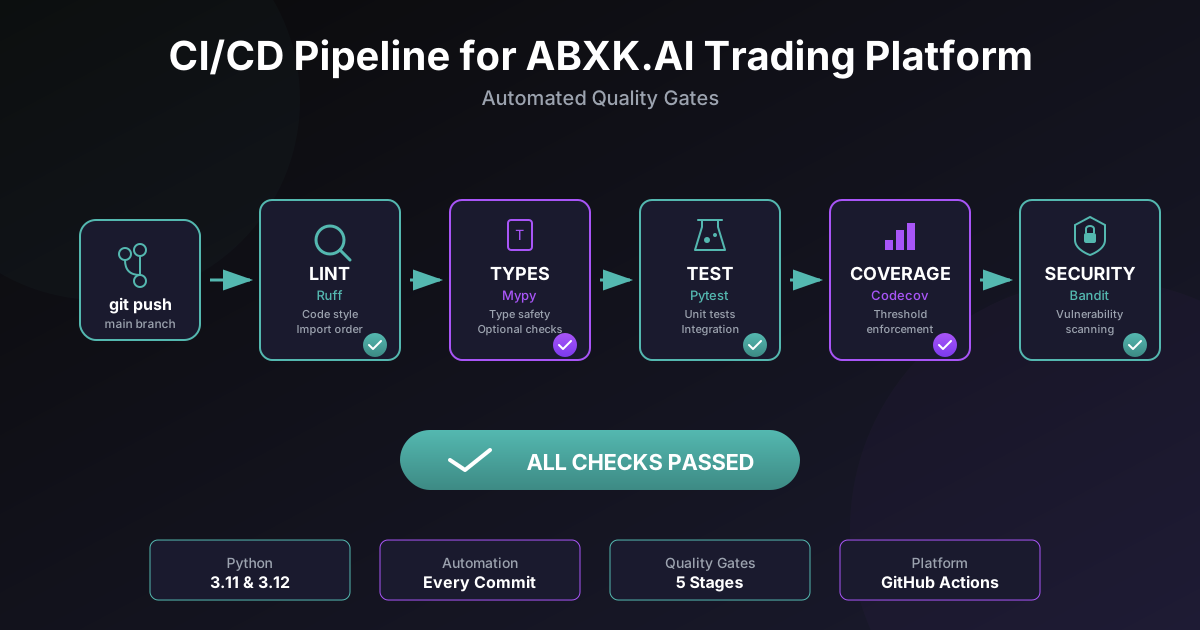
AI Trading Platform: Adding CI/CD to Our Development Workflow
We implemented a CI/CD pipeline for the AI Trading Platform. This post documents the approach, the types of bugs it catches, and why automated testing matters …

AI Adoption in Trading: Why Acting Now Matters
AI adoption in trading is accelerating. Learn why firms that act now gain an advantage, and how our AI trading platform validates this approach through real …
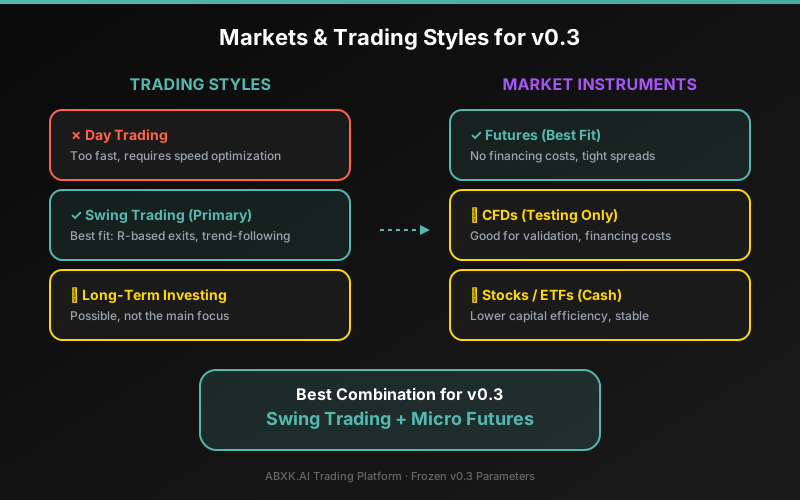
AI Trading Platform: Choosing the Right Markets and Trading Style
We tested our frozen v0.3 exit strategy across different markets and trading styles. Here is what we learned about CFDs, futures, stocks, and why swing trading …

AI Trading Platform: Exit Strategy Breakthrough & Paper Trading System
Our AI trading platform improved expectancy from near-zero to statistically meaningful levels through a two-stage exit strategy. We also built a causal paper …
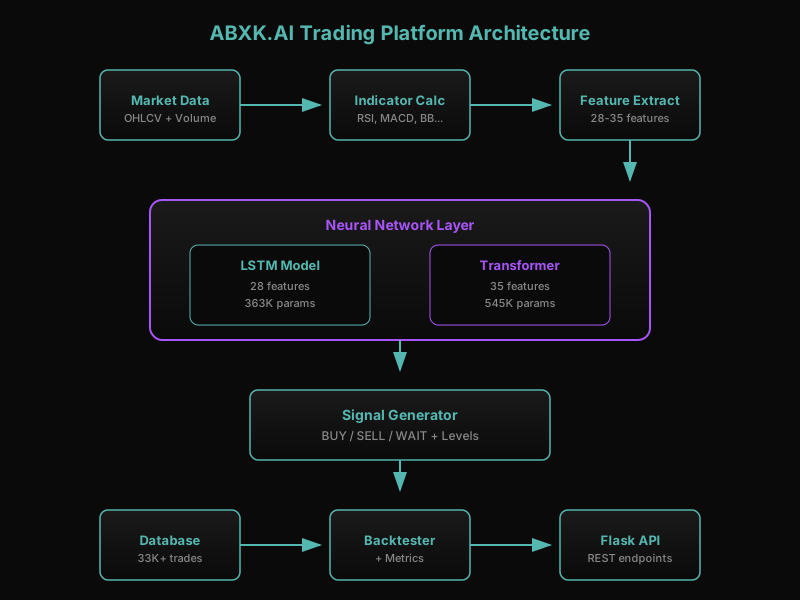
AI Trading Platform: Security Audit & Major System Updates
A comprehensive audit of our AI trading platform reveals a critical security fix, frontend accessibility improvements, and live stats from 33,000+ analyzed …
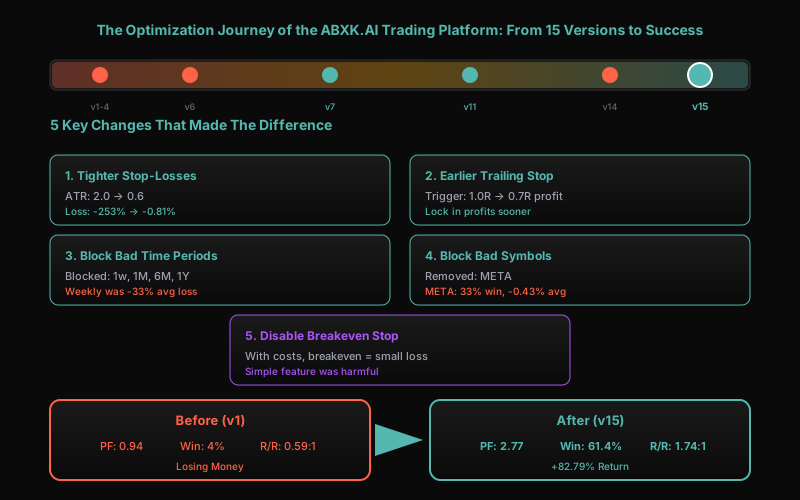
AI Trading Platform: Observing Model Behavior During Strategy Optimization
A research note documenting how iterative changes affected model behavior, risk distribution, and evaluation metrics.
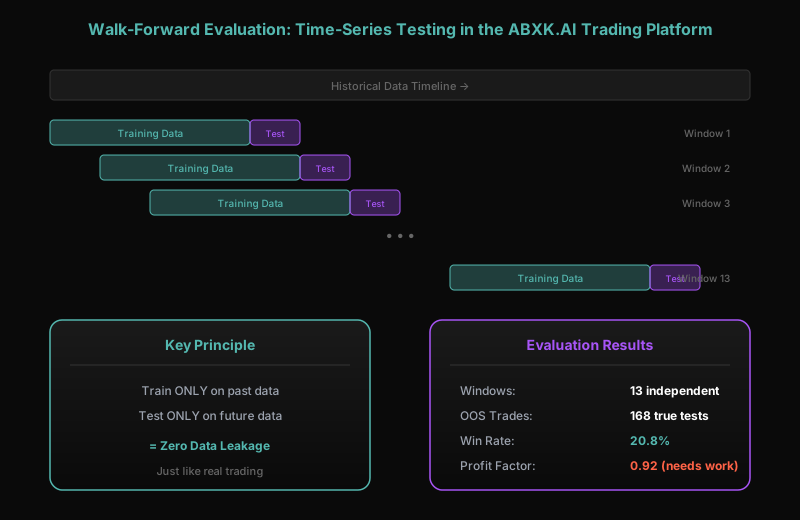
AI Trading Platform Update: Building a Bulletproof Evaluation Framework
Two days of intensive work on preventing overfitting and data leakage. Here's what we built and what we learned.
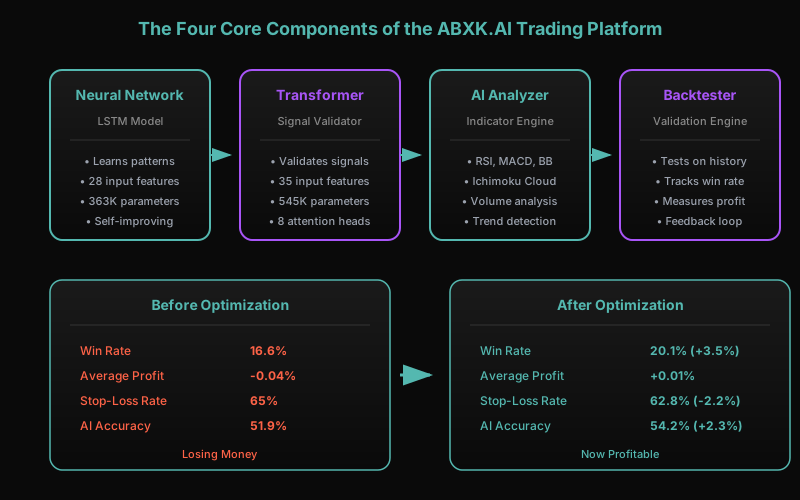
Building an AI Trading Platform: Our Progress So Far
We are building an AI trading system that learns from its mistakes. Here is what we have done, what works, and what problems we still need to solve.
The AI Trading Platform is an internal research project operated exclusively by ABXK.AI. It is not publicly accessible and cannot be used by visitors.
Any results, insights, or examples shared on this website or on social media are provided for informational and educational purposes only and do not constitute financial advice.