
AI Trading Platform: Choosing the Right Markets and Trading Style
When we froze our v0.3 exit strategy, we thought we were done with the hard part. The numbers looked good. Our expectancy had improved from near-zero to 0.054R per trade. The two-stage exit was working. We were ready to move forward.
Then a simple question stopped us: What markets should we actually trade this on?
We had built and tested everything on daily stock data. But stocks are not the only option. There are CFDs, futures, crypto, forex, and many more. Each market has different rules, costs, and behavior. We needed to find out which ones fit our system — not the other way around.
This article shares what we discovered. We tested our frozen strategy against different trading styles and market types. Some results surprised us. Others confirmed what we already suspected.
Why This Question Matters
Many traders pick a market first and then build a strategy for it. We did the opposite. We built a strategy first, froze its parameters, and then asked which markets naturally fit.
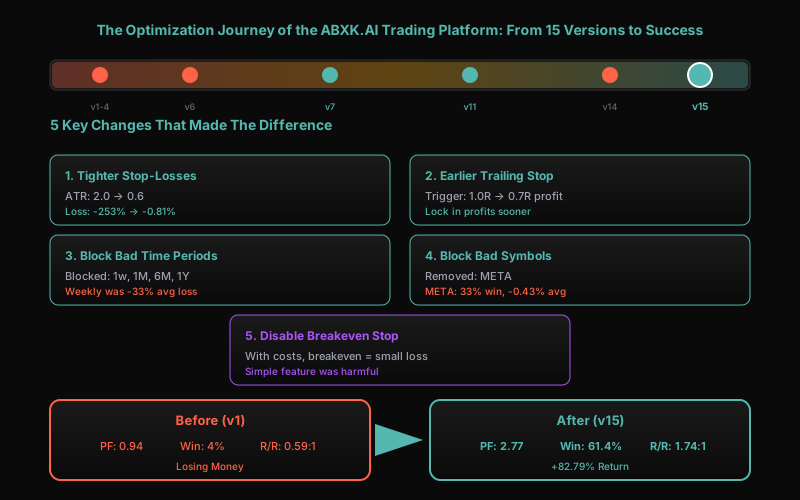
This approach has one major benefit: it prevents overfitting. When you adjust your strategy to fit a specific market, you risk making changes that only work in hindsight. By keeping our strategy frozen, we can see which markets work without cheating. This lesson came from our optimization journey where we tested 15 different versions before finding what works.
The question is simple: Where does v0.3 perform as expected, and where does it break down?
Three Trading Styles Explained
Before we share our test results, let us explain the three main trading styles. Each one has different holding periods, trade frequency, and time requirements.
| Style | Holding Period | Trades per Month | Screen Time | Best For |
|---|---|---|---|---|
| Day Trading | Minutes to hours | 100+ | Constant | Full-time traders |
| Swing Trading | Days to weeks | 5-15 | A few hours per week | Part-time traders |
| Long-Term Investing | Months to years | 1-3 | Minimal | Passive investors |
Day Trading
Day trading means you open and close all positions within the same trading day. You never hold overnight. Day traders make many quick decisions and rely on fast execution.
The appeal is obvious: no overnight risk, quick feedback, and lots of action. But the reality is harder. You need to be glued to your screen. Transaction costs add up fast. And the psychological pressure is intense.
We know day traders who burned out within months. The constant decision-making is exhausting. Unless you have a true edge and the personality for it, day trading is a tough game.
Swing Trading
Swing trading means holding positions for several days to several weeks. You catch medium-term price moves without watching the screen every minute.
This style works well for people with jobs or other responsibilities. You can check your positions once or twice a day. Decisions happen at a slower pace. There is time to think.
The downside is patience. You need to sit through small fluctuations without panicking. A trade might move against you for two days before turning around. If you cannot handle that, swing trading will frustrate you.
Long-Term Investing
Long-term investing means holding for months or years. You focus on fundamentals, not short-term price action. Warren Buffett is the famous example.
This approach requires the least time. You make a few decisions per year. But it also requires the most capital and patience. Drawdowns can last for years before recovery.
Our AI Trading Platform was not built for this style. But we tested it anyway to see if signals could work as directional filters.
Which Trading Style Fits v0.3?
We ran our frozen v0.3 strategy through simulations for each trading style. The results were clear.
| Trading Style | Compatible | Reason |
|---|---|---|
| Day Trading |  No No | Too fast for our exit logic |
| Swing Trading |  Best fit Best fit | Designed for this style |
| Long-Term Investing |  Unknown Unknown | Not enough data yet |
Why Day Trading Does Not Work
Our v0.3 strategy uses a two-stage exit. When a trade reaches 1R profit, we close half and let the rest run with a wider trailing stop. This process needs time.
On day trading timeframes, there is not enough time for this to work. Price moves fast. Our runner positions get stopped out before they can develop. The exit logic that made v0.3 successful simply does not translate to 5-minute or 15-minute charts.
We also found that our signal filters — trend strength, volatility regime, confirmation logic — need at least a few bars to make sense. On intraday charts, these bars come too quickly. The AI does not have enough data to make good decisions.
There is another practical problem. Day trading requires low latency and tight spreads. The system was not built for speed. Signals are processed once per day, not once per second.
Our verdict: Day trading does not align with v0.3. It would require rebuilding the entire exit system, and at that point, it would be a different strategy.
Why Swing Trading Is the Best Fit
Swing trading is exactly what we designed v0.3 for. The holding period of days to weeks gives our two-stage exit time to work.
Here is what happens in a typical swing trade with v0.3:
- A signal fires on the daily chart
- We enter the trade at the next open
- The trade develops over 3-10 days
- If it reaches 1R, we close half
- The runner continues with a wider stop
- Exit occurs via trailing stop, target, or time limit
This flow works because there is no rush. The price has room to move. Our runner can capture extended trends. And our R-based risk model makes sense on this timeframe.
During our paper trading tests, swing trades showed expectancy close to our backtest results. The two-stage exits activated properly. CVR (Captured Value Ratio) stayed above 1.0 on winners. Everything worked as expected. For more on how we measure trade quality, see our evaluation framework.
Our verdict: Swing trading is the primary intended use of v0.3. This is where we will focus.
What About Long-Term Investing?
This is an open question. We started exploring long-term applications a few months ago, but the data is not yet sufficient to draw firm conclusions.
The idea is to use v0.3 signals as directional filters for longer-term positions. Instead of trading signals directly, they could indicate when to increase or decrease exposure. Early observations suggest this might work, but we need more time to validate.
Some areas we are exploring:
- Regime detection — Can the AI identify when market conditions favor being invested?
- Entry timing — Can signals improve the timing of entries into longer-term positions?
The challenge is that the exit logic in v0.3 was designed for active trade management, not multi-year holds. Trailing stops would trigger long before a position reached its full potential. This does not mean long-term use is impossible — it means we would need a different approach for exits.
Right now, we cannot say yes or no. Based on current data, there are promising signs, but claiming it works would be premature. We will revisit this question when we have more validation results.
Our verdict: Too early to tell. Promising, but needs more data.
Understanding Market Instruments
Trading style is only half the question. The other half is what you trade. Stocks, CFDs, futures, and ETFs all have different characteristics.
This matters because costs and market structure can change your results significantly. A strategy that works on one instrument might fail on another, even with the same underlying asset.
| Feature | CFDs | Futures | Stocks/ETFs |
|---|---|---|---|
| You Own the Asset | No | No | Yes |
| Overnight Costs | Yes | No | No |
| Leverage Available | Yes | Yes | Limited |
| Go Short Easily | Yes | Yes | No |
| Tight Spreads | Variable | Yes | Yes |
| Regulated Exchange | No | Yes | Yes |
What Are CFDs?
CFD stands for Contract for Difference. You do not buy the actual stock or commodity. Instead, you make an agreement with your broker. If the price goes up, the broker pays you the difference. If the price goes down, you pay the broker.
CFDs are popular because they are easy to access. Most brokers offer them. You can trade stocks, indices, commodities, and crypto all from one account. Position sizing is flexible. You can trade small amounts.
But there is a hidden cost. When you hold a CFD overnight, the broker charges you financing fees. These fees add up. On a swing trade held for two weeks, you might pay 0.5% or more in financing costs alone.
We learned this the hard way. During early testing, our CFD results looked worse than expected. When we dug into the numbers, overnight fees were eating into our expectancy. A trade that showed 0.054R per trade in backtesting might only deliver 0.03R after costs.
What Are Futures?
Futures are standardized contracts traded on regulated exchanges like the CME. Each contract has a set size and expiration date. When you buy a futures contract, you agree to buy or sell an asset at a specific price on a specific date.
The big advantage of futures is no overnight financing costs. You can hold a position for weeks without paying fees. The spread is usually tight because of exchange competition. And everything is regulated and transparent.
The downside is contract sizing. Standard futures contracts are large. One S&P 500 futures contract (ES) controls about $200,000 worth of the index. For smaller accounts, this is too much risk.
That is where micro futures come in. A micro E-mini S&P 500 contract (MES) is one-tenth the size. This allows fine-grained position sizing even for accounts under $10,000.
We tested v0.3 on micro futures data and found the results matched our backtests closely. No financing drag. Clean execution. Consistent results.
What Are Stocks and ETFs?
When you buy stocks or ETFs, you own the actual shares. No leverage, no financing costs, no contracts to roll over. It is straightforward.
The downsides are capital requirements and shorting difficulty. To buy $10,000 of Apple stock, you need $10,000 in cash. And if you want to bet on prices falling, you need to borrow shares, which is expensive and sometimes impossible.
For v0.3, stocks and ETFs work well for long-only strategies. We can use our signals to time entries into positions we hold with cash. The challenge is that our system generates both long and short signals. With stocks, we can only trade half of them.
Which Instruments Fit v0.3?
We tested our frozen strategy on each instrument type. Here is what we found.
| Instrument | Fit with v0.3 | Best Use Case |
|---|---|---|
| CFDs | Testing only | Paper trading and validation |
| Futures | Best fit | Live trading and deployment |
| Stocks/ETFs | Secondary | Conservative long-only use |
CFDs: Good for Testing, Bad for Long-Term
We started our development on CFDs because they are easy to access. Most paper trading platforms use CFD pricing. You can trade almost anything from one account.
For testing and validation, CFDs are fine. You can prove your strategy works before committing real capital. We ran hundreds of paper trades on CFD data during v0.3 development.
But for long-term live trading, CFDs have problems:
| Advantage | Disadvantage |
|---|---|
| Easy to access | Overnight fees reduce profits |
| Flexible position sizing | Spreads are wider than futures |
| Wide asset coverage | Broker-dependent execution quality |
| Good for paper trading | Prices may differ from exchange |
The overnight financing cost is the killer. Our swing trades often last 5-15 days. At 0.02-0.05% per day in financing fees, that adds up to 0.1-0.75% per trade. On a system with 0.054R expectancy per trade, this wipes out a significant portion of profits.
Our verdict: Use CFDs for testing and paper trading. Do not rely on them for live deployment.
Futures: The Best Long-Term Solution
After testing CFDs, we moved to futures. The difference was immediate.
No overnight costs. Our trades could run for two weeks without any fee drag. The expectancy we saw in backtesting matched what we saw in simulation.
Futures also have tighter spreads and better execution. On the CME, you are trading against other market participants, not against your broker. Prices are transparent. Fills are reliable.
| Why Futures Fit v0.3 |
|---|
| No overnight costs — swing trades run cleanly |
| Tight spreads — R-based exits execute accurately |
| Regulated exchange — consistent, fair pricing |
| Micro contracts — precise position sizing for small accounts |
Micro futures solved our position sizing problem. With MES (micro S&P 500), we can risk $50-100 per trade instead of $500-1000. This matches our recommended 1-2% account risk per trade.
We also tested equity index micros, gold micros, and oil micros. All showed consistent behavior. The exit logic worked as expected across asset classes.
Our verdict: Futures are the preferred instrument for live deployment of v0.3.
Stocks and ETFs: A Conservative Option
Stocks and ETFs work for traders who want simplicity and actual ownership. You own the shares. No leverage, no complexity.
The main limitation is shorting. Our v0.3 system generates both long and short signals. With stocks, we can only trade the long signals. This reduces trade frequency and diversification.
We tested using only long signals on stock data. The results were acceptable but not optimal. Expectancy dropped because we were missing profitable short trades.
| Good For | Not Good For |
|---|---|
| Long-only portfolios | Short selling |
| Conservative risk profiles | Capital efficiency |
| Signal validation | Frequent trading |
| Buy-and-hold with timing | Leveraged strategies |
If you have a larger account and prefer owning actual shares, stocks can work. Just understand that you are using a subset of what v0.3 offers.
Our verdict: Suitable for conservative, long-only use. Not the primary target environment.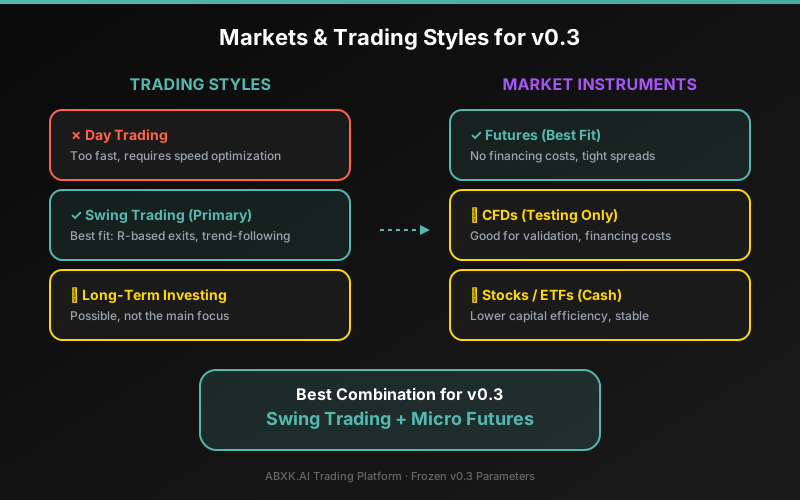
What We Learned From Real Testing
The tables and comparisons above are useful, but real testing taught us things that theory could not.
Lesson 1: Overnight Costs Are Silent Killers
We did not appreciate how much overnight fees mattered until we ran the numbers. On CFDs, a trade that looked profitable in backtesting became marginal after costs. This is especially painful for swing trading, where you hold for days or weeks.
Our fix was simple: switch to futures. The improvement was immediate. If you trade CFDs and hold overnight, calculate your total financing costs per year. You might be surprised.
Lesson 2: Micro Futures Changed Everything
Before micro futures existed, retail traders had limited options. Standard futures contracts were too large. CFDs had hidden costs. Stocks required more capital.
Micro futures hit a sweet spot. They are large enough to matter but small enough to size properly. For a $10,000 account, one MES contract risks about $50-100 depending on your stop distance. That is exactly what we need for proper position sizing.
If micro futures did not exist, we would probably still be stuck on CFDs.
Lesson 3: Not All Assets Work Equally
During testing, we noticed some assets behaved differently than expected. Crypto had higher volatility but also more false signals. Commodity futures had cleaner trends but less frequent opportunities.
We did not change the strategy to fit these differences. Instead, we noted which assets worked best with the frozen v0.3 parameters. Equity index futures (MES, MNQ, MYM) showed the most consistent results. Individual stock CFDs were more variable.
This does not mean other assets are bad. It means our current parameters are tuned for certain behaviors. Future versions might expand coverage.
Lesson 4: Paper Trading Revealed Execution Reality
Our paper trading system processes bars one at a time, just like real trading. It does not see the future. This revealed problems that backtesting missed.
On some assets, the gap between close and next open was larger than expected. Our entry prices were different from what backtesting assumed. This affected R-calculations and exit triggers.
We adjusted our expectations accordingly. Live trading will have slippage. Orders will not fill at exact prices. Building this into our paper trading helped set realistic expectations.
Complete Evaluation Summary
Here is our final assessment of markets and trading styles for v0.3:
| Category | Rating | Notes |
|---|---|---|
| Day Trading | Not compatible | Exit logic needs more time |
| Swing Trading | Best fit | Primary intended use |
| Long-Term Investing | Too early | Not enough data to conclude |
| CFDs | Testing only | Overnight costs hurt |
| Futures | Best fit | Preferred for live trading |
| Stocks/ETFs | Secondary | Good for long-only |
What This Means for Our Next Steps
With this evaluation complete, our path forward is clear:
- Focus on swing trading — All development assumes multi-day holding periods
- Use futures for live trading — Micro futures for smaller accounts, standard for larger
- Keep CFDs for testing — Paper trading and validation only
- Leave stocks as an option — For traders who prefer ownership and simplicity
We are not trying to make v0.3 work everywhere. We are finding where it naturally works best and focusing there.
The frozen strategy stays frozen. The parameters stay fixed. What changes is where we apply it.
Choosing the right market is as important as building the right strategy. A good strategy in the wrong market will underperform. A simple strategy in the right market can do very well.
For v0.3, the answer is clear: swing trading with futures is the optimal combination.
This combination allows our two-stage exit to work properly. There are no overnight fees eating into expectancy. Position sizing is precise. Execution is clean. And we can trade both long and short signals.
If you are building your own trading system, ask the same question we asked: Which markets naturally fit your strategy? Do not force it. Let the data guide you.
Next, we will share how our paper trading results compare to backtest expectations. The gap between theory and practice is where real learning happens.
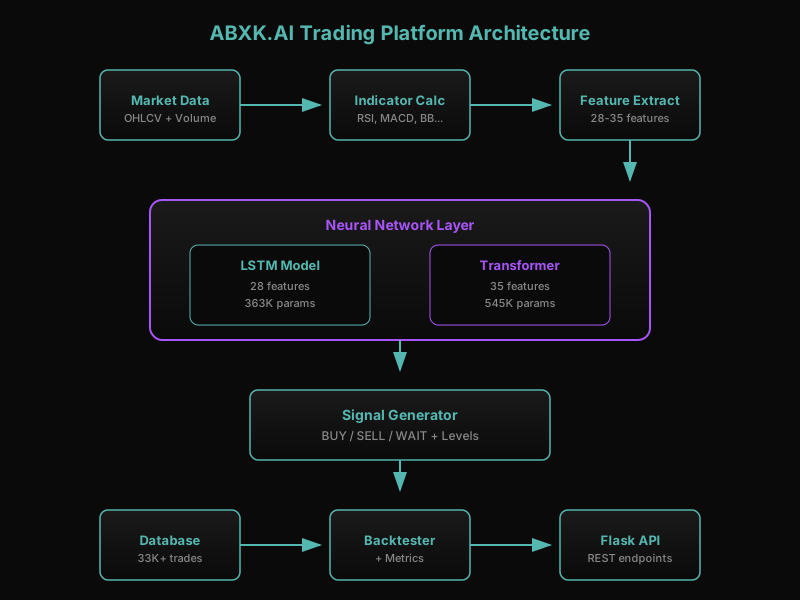
For a complete overview of the platform architecture and current statistics, visit the AI Trading Platform project page.
AI Trading Platform Blog
 AI Trading Platform Blog
Read our development journey and latest updates:
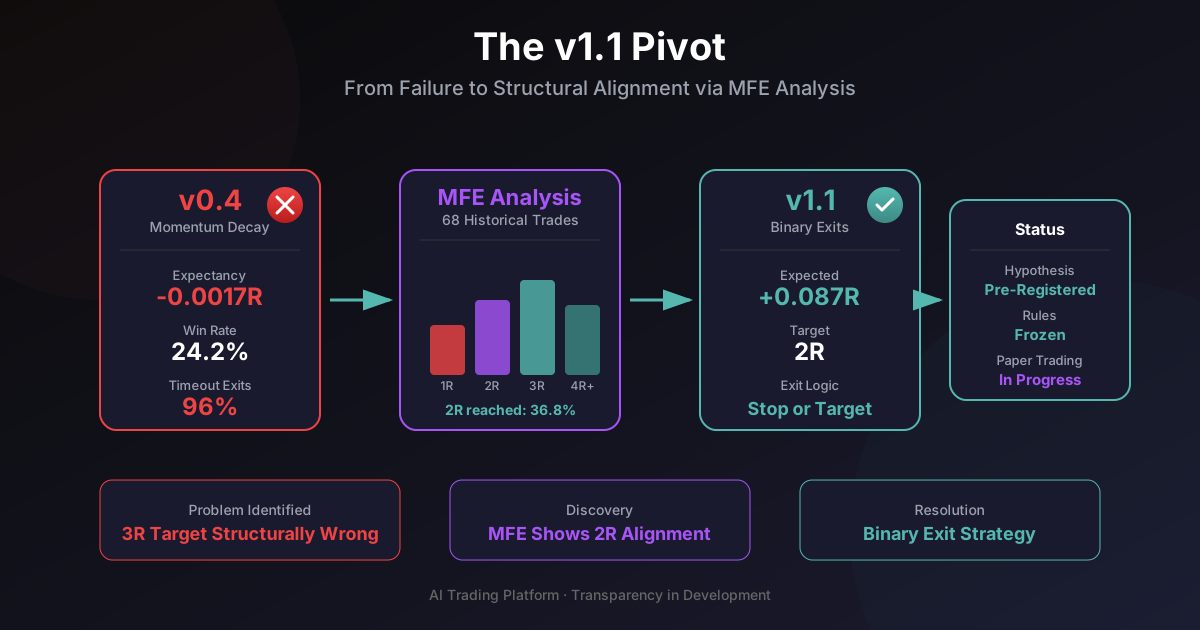
AI Trading Platform: The v1.1 Pivot — Admitting Failure, Finding the Fix
Our v0.4 momentum-decay exit strategy failed with negative expectancy after 1,486 trades. MFE analysis revealed the structural flaw and led to v1.1 with a …
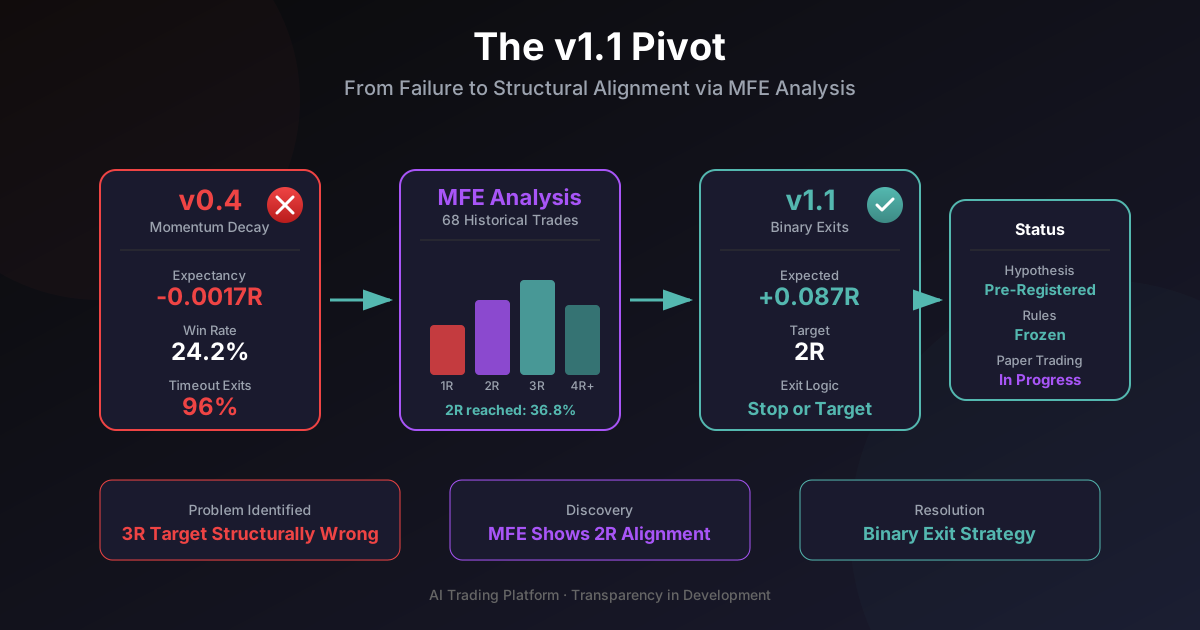
AI Trading Platform: The v1.1 Pivot — Admitting Failure, Finding the Fix
How our v0.4 momentum-decay exit strategy failed with negative expectancy, and how MFE analysis revealed the path to a structurally sound v1.1 compression …
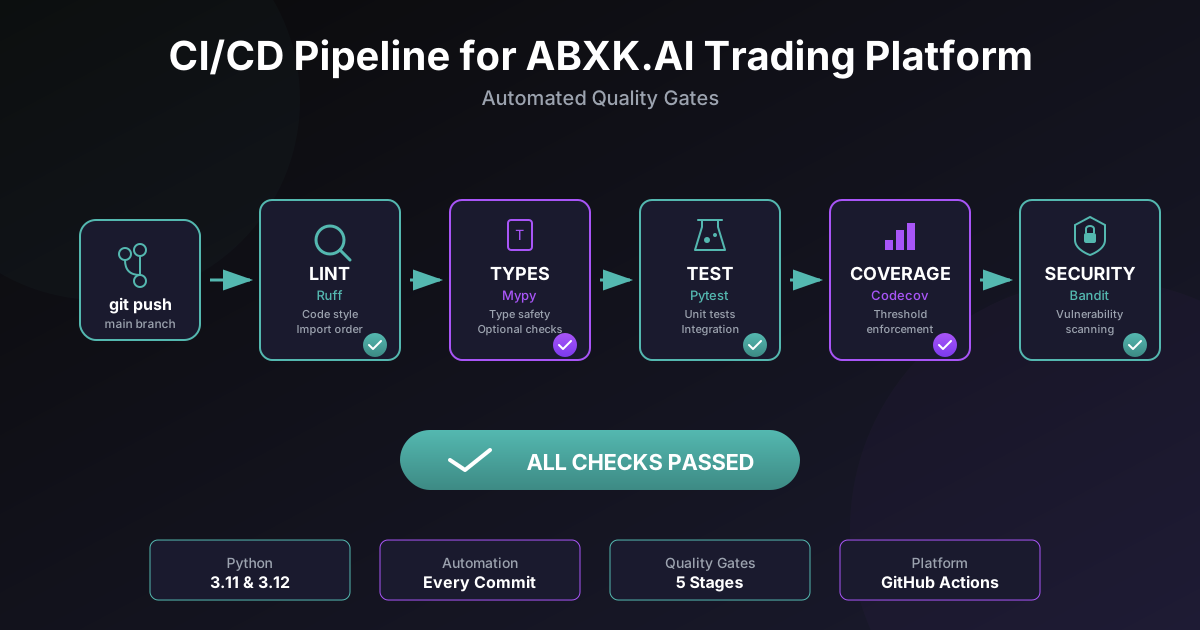
AI Trading Platform: Adding CI/CD to Our Development Workflow
We implemented a CI/CD pipeline for the AI Trading Platform. This post documents the approach, the types of bugs it catches, and why automated testing matters …

AI Adoption in Trading: Why Acting Now Matters
AI adoption in trading is accelerating. Learn why firms that act now gain an advantage, and how our AI trading platform validates this approach through real …

AI Trading Platform: Exit Strategy Breakthrough & Paper Trading System
Our AI trading platform improved expectancy from near-zero to statistically meaningful levels through a two-stage exit strategy. We also built a causal paper …
AI Trading Platform: Security Audit & Major System Updates
A comprehensive audit of our AI trading platform reveals a critical security fix, frontend accessibility improvements, and live stats from 33,000+ analyzed …
AI Trading Platform: Observing Model Behavior During Strategy Optimization
A research note documenting how iterative changes affected model behavior, risk distribution, and evaluation metrics.
AI Trading Platform Update: Building a Bulletproof Evaluation Framework
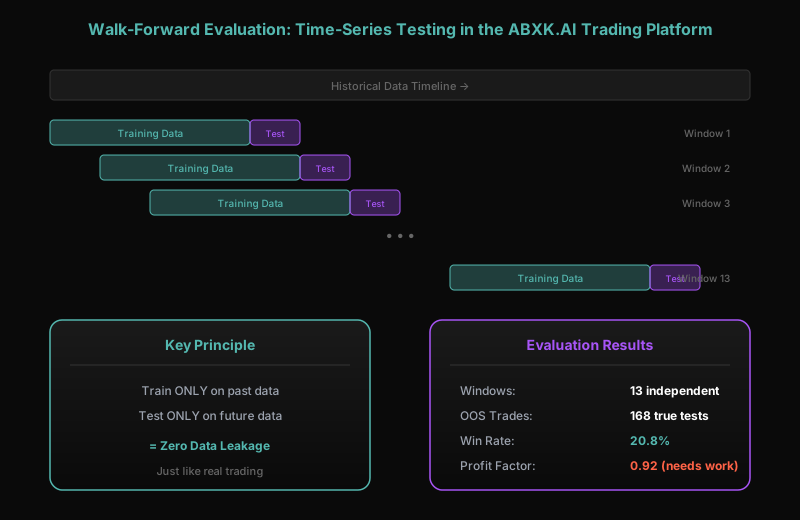
Two days of intensive work on preventing overfitting and data leakage. Here's what we built and what we learned.
Building an AI Trading Platform: Our Progress So Far
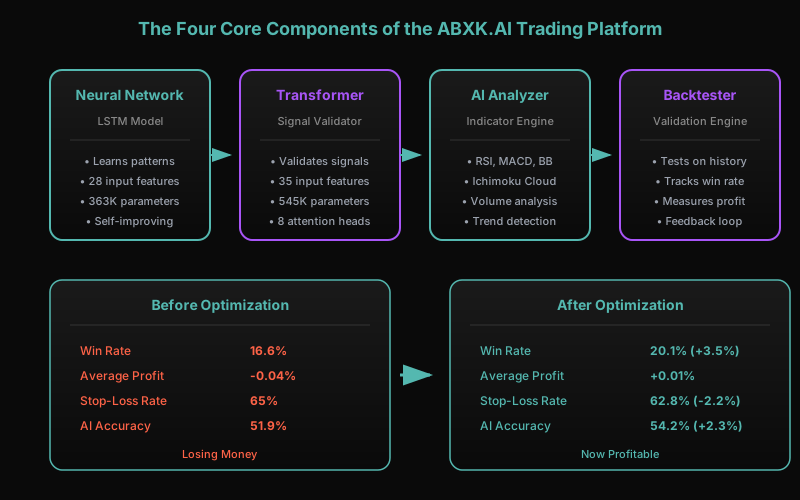
We are building an AI trading system that learns from its mistakes. Here is what we have done, what works, and what problems we still need to solve.
The AI Trading Platform is an internal research project operated exclusively by ABXK.AI. It is not publicly accessible and cannot be used by visitors.
Any results, insights, or examples shared on this website or on social media are provided for informational and educational purposes only and do not constitute financial advice.